


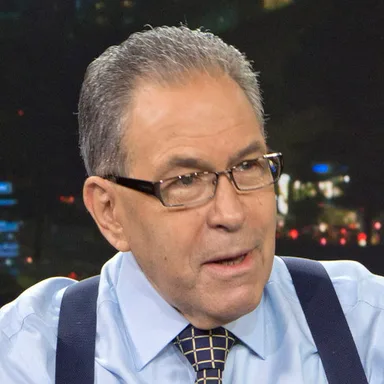
Michael Stoler Real Estate Expert
This week's guest: Gene Spiegelman Vice Chairman & Principal Ripco Real Estate
Transcript
Automated transcript · uncorrectedGood morning. This is Michael Stiller for the Stolar Real Estate Report on the Cats Roundtable. What’s really happening in retail? I’m not the expert, but I have one of the cities leading city and probably the nation’s retail expert, Jeene Spiegelman, who is the vice chairman and a partner at RipGo Real Estate. Thanks for being here this morning.
Good morning, Michael, Thank you.
Okay, Jeane, I called you the king the maven. What’s really happening in retail? Everybody thought that retail was dead, especially that the pandemic came on. What’s happened since the pandemic and what’s happening today?
Well, we certainly experienced several difficult years due to the COVID pandemic, and we were also experiencing difficult years before the pandemic when we had the retail apocalypse narrative in full swing. But coming into twenty twenty four and finishing up twenty twenty three, we really feel that the headwinds are not in front of us right now. We have
a slight tailwinds. Humors are spending, and we’re seeing the results of that in retail leasing here in New York and around the country. The macro economic environment for retail real estate is pretty good.
What’s happened on Fifth Avenue recently with these acquisitions by these major companies to buy their retail real estate.
Well, I think these major global brands understand that they’ve been in New York City, they’ve been on Fifth Avenue, they’ve been on Madison Avenue for decades, and they acknowledge that this is a long term investment. These companies have expanded their houses for many different brands, and why not own the real estate long term. I think it’s also
an example of how much capital, how much equity is sitting on the sidelines in the marketplace today that’s available for investment. So they consider it to be a wise investment.
But they’re paying get high prices, much higher than office space is selling for on Fifth Avenue around the city in general.
Well, it’s very hard to underwrite the value of the deals from a leasing perspective, and I think there is really there’s no connection between the retail assets in a sense the office component of any building or an office building in total. They have a value for their global branding and as we always believe, Fifth Avenue remains a
top Global Branding Street, and if it would if we were to underwrite a lease to support the economics of those deals, it would probably be a lease that we could not underwrite today. But they have a long term capital investment need. It allows them to work with the space as they see fit. It would allow them to
interchange brands in and out of a particular space, so they considered it a smart investment.
Now, besides Fifth Avenue, are they been buying in other areas like the Flatiron or the Soho or the meatpacking area.
There’s there’s been buying, I would say, primarily in Soho. Recently Dyson and the Prizes border property and so that they will put a store into. But this is this has been happening across the globe for some time now.
The luxury brands own real estate, whether it’s in London or Paris and other cities. So it’s not a unique concept. And LVMH has owned their building at one fifty seventh Street for over twenty years now, and there’s other brands who own buildings throughout New York. So I think that, you know, it’s not a widespread investment activity. But obviously
these are two very hope excuse me, high profile deals.
Now, what about the macy site.
Well, you know, Macy’s obviously occupies a very large, full city block in New York City and in the middle of the Penn District, which is, you know, the heart of where a lot of the future development and current development has happened with Hudson Yards and Manhattan West and obviously for Nado’s Penn District program. So it’s a hugely
valuable piece real estate. But as far as the brand is concerned, it’s their number one door. So if that doesn’t exist, I don’t know how Macy’s exist. So perhaps it’s a conundrum from a real estate investment perspective and a retailing perspective, and I think that’s where the tension is with the investors as well as their other owned
or long term least real estate assets around.
The country now. But certain retailers are expanding, I mean, is Dick’s expanding.
Dix Is expanding. There was an article recently this week about how they’re going to expand their House of Sports concept by utilizing a large format, vacant or underutilized real estate and malls around the country. So they’re going to take advantage of a soft spot in sort of the national retail real estate environment.
Okay, what about Target, I think you were responsible for it. Also, they recently opened up in Unit Square, the hundredth store that they’ve opened since their interests in the city a number of years ago.
Well, I think you know, Target’s another large national retailer, and they’re always strategically expanding their brand, whether it’s here in New York City, in Manhattan, outside of New York and the New York metropolitan region, or across the country.
They’re very strategic about what they’re looking to deliver to their customers, whether it’s an urban format or it’s a suburban large format store. But I think expansion is very strategic. And obviously brands are struggling with high cost of operating in the urban environment. They’ve been struggling with the large amount of shrink in their store sales due to our
retail theft, and these companies, you know, will continue to navigate the pros and cons of all the real estate markets and you know, consumer buying and spending habits.
Now, with regard to that, you recently entered into an agreement with a company called Bridges Development to work with certain retail projects. You want to talk about that Highway Plaza, the One Harlem and the Marie Avenue shops.
Sure. So, summer activity at Ripka real Estate involves our principal development and investment activity. It’s focused in the retail real estate sphere because obviously that’s where our expertise lies. So we have found, you know, niche markets and niche developments throughout the New York metropolitan marketplace that we could exercise our retail expertise for our principal activities and our partners.
So we have recently developed projects with Target in Brooklyn. We developed a retail strip alongside a new home depot in Masbeth, Long Island excuse me, Massbeth, Queens and along with urban edged properties, we purchased a regional mall in Massive peeklea Long Island call Sunrise Mall, which are in the process of redeveloping.
Okay, with regard to the supermarket business, you’ve been responsible for Wegmans coming into New York, and I believe that it’s been recently announced be Wegmans is going to be opening up their third center on the West Side. We want to talk about Wegmans in general.
Yes, Well, Wegmans opened a store in Brooklyn a number of years ago. We were not involved in that. We were fortunate to be involved in the opening of their first store in Manhattan in the former Kmart space at seven to seven Broadway, and most recently was announced that a lease was completed on nineteen thirty Broadway on the
upper West Side in the Lincoln Square neighborhood for fifty nine thousand square feet occupying a former bed bath beyond space. So Wegman’s been has taken advantage of the marketplace on spaces that were forming occupied by retailers who have shrunk their footprint or have gone out of business, and they see the opportunity to backfill these large format spaces that
accommodate their business.
Okay, with regard to that type of thing, let’s talk about the the Astra pace property that you worked on and the cable building today.
Sure, so, the asked place property was a former Kmart store. It was a Kmart in operation when we first looked at it. With Wegmans. We negotiated a lease termination with Kmart as long as they extended long term lease with Vernado, and it was a successful transaction. It started during COVID.
It started when things in the marketplace were not clear with the future in New York was going to be. I could say Wegmans was very brave. They made a very large investment in the future in New York. They believed in it. We all believed in the future in New York, but things were not clear at that time.
And they’re going to benefit long term from occupying an eighty five thousand square foot space that allows them to present to their customer. What is the full assortment of the Wegmans product and services that they delivered to the marketplace.
And it seems today that the markets responding very well, people joining the store.
What about the former six to eleven Broadway.
Six to eleven Broadway, what is known as the Cable Building at the corner of Broadway in Houston Street. It was occupied by Creighton Barrel for the past twenty one years. They enjoyed a successful long run there. They recently relocated to a small store in the Flatiron district, which made available a forty thousand square foot space in a very
well noted architecturally distinctive building with an amazing retail presence at the corner of NoHo Soho and Greenwich Village. And you know, a new retail is gonna take advantage of a space that was purpose built for a retailer two decades ago, that will serve the next two decades very well in an architecturally distinctive, very busy, high traffic location.
What about retail and.
The Burroughs, Well, retail in the Burrows has been solid, different from what hattened in Manhattan as a result of COVID. The Burroughs people did not flee. People lived there, and we retailers continue to service their needs. We never saw the high availability rates, we never saw the equal discount in rents. That was all relative to Manhattan being vacated.
So the Borroughs performed very well, and we saw very little dip in activity in the far of the Boroughs in the City of New York. And I think that also translated into the suburban marketplace as well. Those markets were much more stable and they continue undebated today.
Okay, what do you think of two thousand and twenty four, in twenty twenty five, what’s your outlook?
Well, twenty twenty four is when we started our conversation. Today, I believe that we have a slight tailwind. We don’t have a headwind, and if the consumer is still spending, retailers will continue to be comfortable opening stores.
Okay, last question on that. With regard to that, what about restaurants. They seem to be open all over the city.
Well, you know, food and beverage and restaurants really led us out of the COVID pandemic real estate situation. F and B leasing used to be twenty five thirty percent of the total marketplace and increased over forty percent of activity.
People need to eat, people love to eat, and the city now you know, formulated the open streets program, and food and beverage just keeps everyone interested, whether it’s you know, individual operators, national chains like Raising Canes, or markets like Italy opened and soho, we just did another Wegman’s deal.
Whole Foods just signed a small forma at least at Stuyvesant Town. So food and beverage, whether it’s market or restaurants or quick serve, we will continue to see a high level of food and beverage activity throughout the whole marketplace.
As I would say on my television show with my Apple Always Shiny, I’d say we’re getting shiny on the retail. It’s been getting better, and i’d like to thank Jens Spiegelman in a rip over real estate, for being here today.
Thank you, Michael
Sunday, March 10, 2024

Still think Biden will be replaced as the nominee.
Dick Morris Political Strategist and Author

New Jersey political scene 2024.
Eric Shuffler Founding Partner, River Crossing Strategy Group
World traveler, leading businesswoman.
Washington Post Sr. Associate Editor Lally Weymouth

Comments on Biden's State of the Union speech.
Roger Stone Political Strategist & Consultant

Ukraine needs military aid immediately.
Dr. William J. Parker III Retired U.S. Navy Captain; National Security Analyst

Why doesn't Biden get it? It's the border.
Judge Jeanine Pirro U.S. Attorney for the District of Columbia


Alteration of gut microbiota affects the severity and complications of COVID-19
Dr. Peter Michalos WABC Medical Expert

Origin of daylight savings time.
Steve Kates Space and astronomy broadcaster (Dr. Sky)
Michael Stoler
The Stoler Report with Michael Stoler: David Schechtman
Michael Stoler Real Estate Expert
The Stoler Report with Michael Stoler: Eli Weiss and Andrew Albstein
Michael Stoler Real Estate Expert
The Stoler Report with Michael Stoler: Eli Weiss and Andrew Albstein
Michael Stoler Real Estate Expert
