


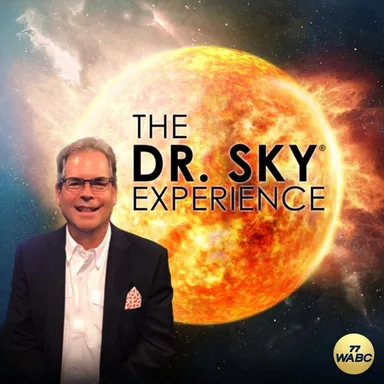
Steve Kates Space and astronomy broadcaster (Dr. Sky)
Origin of daylight savings time.
Transcript
Automated transcript · uncorrectedWhat is today is Steve Kates, otherwise known as Dot the Sky, and he always comes up with something interesting. So see Sunday morning. What do we got today?
Good morning, John, Good to be back on the Cat’s roundtable. Here we go in space. Space fans can get excited at least I will hopefully others on Space Ex’s next attempt to launch its big massive Starship rocket. This will be flight number three that should happen by about March the fourteenth. And it just in case people don’t know
about this rocket. It’s four hundred feet tall, john the most powerful rocket in the world. On top of it sits the Starship that is the vehicle that will hopefully take people to the Moon. It’s one hundred and sixty five feet tall. Both of these vehicles, the booster and the starship can make a successful soft landing. That’s what
they’re trying to get to do. But Johnny can launch one hundred and sixty five tons into space and it’s powered that is the main booster by thirty three Raptor engines, liquid methane, liquid oxygen.
We wish them well.
The other two, of course, they had a predictive failure on these I think it’s a great story and hopefully people will see them do this successfully.
Understood, and I I hope they land well, I mean it’s anything new one the other moon landing that went to a strength.
Well, John, the batteries on both of those, both the Japanese and the us Lander pretty much the batteries have died. The intuitive machines believes it’s somewhat of a success because they actually got it to the moon. Well, we talked about this many times, and to tell people again, there needs to be a little better clarification on the engineering
side on these so they don’t topple over, which is an understatement. But John, here’s something fascinating. We’d shift to the mystery of the week and this is really fascinating. I always look for something that’s unusual but interesting. Here we go an astrolabe one is it? Well, it’s an ancient pocket computer that the Greek, the Arabic nations and
other Christians had developed to help locate objects in the sky. So there’s one in the museum in Barona, Italy, the Barona astrolith. It’s an eleventh century Islamic artifact with Arabic, Hebrew, and Christian symbols embedded on these brass discs, so it was like a computer of the old days. But here’s an important story. It shows evidence John, in the world
of science, of cooperation between Arabic nations, Jews and Christians and science. That’s amazing. But the findings come from what I said, the museum in Barona, Italy. But John, if you had this in your hand, it would also help people locate where Mecca was, predict eclipses, stars and planets.
I think that’s totally incredible because the big question is how the heck did they know how to do this math with such an amazing device that was maybe the size of a small CD that you’d put into your car or your home stereo. Isn’t that incredible that.
They might have had some help by with somebody imagine?
Yeah, absolutely, John. But if you look at this, that’s why it’s probably one of the most talked about and visited artifacts in this museum in Verona, Italy, because if you look at it, it has interchangeable discs in brass, and it has all these wheels, and it has a little viewfinder that you can look through. But that’s totally
incredible because we look at this, John, You’re probably right they must have had some intercession, because the same thing goes for the Pyramids. Hopefully we’ll find answers to that. But if we close out, John, we always talk about the live sky. Now here we go, folks. Daylight saving time, as we know for much of the nation, started around
two am this Sunday morning.
When did it start?
Well, whether you like it or not, folks in America, it’s one hundred and six years old. It started officially in America marks the thirty first at nineteen eighteen. That’s a long time ago. But it started in Europe back in April on the thirtieth of nineteen sixteen in the German Austro Hungarian region of that particular imp But you know, John,
many people are against it, and Senator Ruvio in Florida was petitioning to get rid of it, as a lot of people say it’s not necessary. There’s a big argument on that. But it started today and obviously like it or not, there’s the time change. Well, we find out, John, that the big eclipse of the Sun is coming now
less than a month away, and I remind people to go to the Doctor Sky Experience at WABC Radio. Why we have updates down on how people can see this eclipse, where it’s going to happen from New York State all across the nation. I’m so excited and what’s say you, this is a great time to be talking about stuff
like this.
Well, like the mysteries of our universe, a solar system always get to me and it’s just one of the most interesting things. And I think our segment is very good. I think people write to us all about it. They really enjoy what’s up there.
Thank you, Joe. It’s good to be with you on the Cat’s Roundtable as remind people what we open open their minds and keep their eyes to the skies. Good health and happiness as we move into the spring season of twenty twenty four.
Well godless, thank you,
Sunday, March 10, 2024

Still think Biden will be replaced as the nominee.
Dick Morris Political Strategist and Author

New Jersey political scene 2024.
Eric Shuffler Founding Partner, River Crossing Strategy Group
World traveler, leading businesswoman.
Washington Post Sr. Associate Editor Lally Weymouth

Comments on Biden's State of the Union speech.
Roger Stone Political Strategist & Consultant

Ukraine needs military aid immediately.
Dr. William J. Parker III Retired U.S. Navy Captain; National Security Analyst

Why doesn't Biden get it? It's the border.
Judge Jeanine Pirro U.S. Attorney for the District of Columbia


Alteration of gut microbiota affects the severity and complications of COVID-19
Dr. Peter Michalos WABC Medical Expert
This week's guest: Gene Spiegelman Vice Chairman & Principal Ripco Real Estate
Michael Stoler Real Estate Expert
Steve Kates
Russian Satellites Track U.S. Spacecraft as Japan Targets Mars’ Mysterious Moon
Steve Kates Space and astronomy broadcaster (Dr. Sky)
Deep-Space Mysteries, UFOs and the Orionid Meteor Shower
Steve Kates Space and astronomy broadcaster (Dr. Sky)
The Mysteries of Mermaids, El Niño and the Antarctic Ice
Steve Kates Space and astronomy broadcaster (Dr. Sky)
Exoplanet Radio Signals, SpaceX’s Heavy Rocket Test and Nuclear Propulsion
Steve Kates Space and astronomy broadcaster (Dr. Sky)
Supersonic Jets, SpaceX’s Next Starship Launch & Trump’s Golden Dome Defense System
Steve Kates Space and astronomy broadcaster (Dr. Sky)
The Science Behind Hurricanes, Cosmic Radiation and the Universe
Steve Kates Space and astronomy broadcaster (Dr. Sky)
