


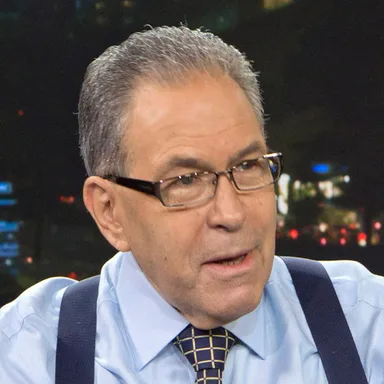
Michael Stoler Real Estate Expert
Interviews Jeff Levine, founder & Chairman of Douglaston Development
Transcript
Automated transcript · uncorrectedGood morning. This is Mike Stoler for the Stolar Real Estate Report. He’s a Titan of real estate in New York. He’s also the Titan of real estate in Scottsdale, Arizona, I believe, and also has roots in London. But this Brooklyn Bourne developer knows everything about the real estate market and he’s a community leader, a philanthropist and a good friend.
I have Jeff Levine who is the shaman of the board of Douglaston Development, Lavine Builders, Clinton Management and some other companies. I guarantee you thanks for being here.
Today, guilty at charged, pleasure to be here.
So let’s talk about the real estate world today. Following you many times you never liked the condo market, all of a sudden, Jeff Levine’s involved with the condo market. Talk about it.
Well, much like in sports, you have to take offensively what they give you on the defense. And the reality is as a result of the COVID inspired inflation that occurred back from nineteen through twenty three, subsiding somewhat in twenty four. The reality is that we interest rates make it impossible with the tax abatement programs that are currently
available to do multifamily mixed use, which is what I love to do. So the reality is that leaves two options the affordable market, where I’ve been active for the past fifty years and continue to be very active, thank you, as well as the condo market. We’re an opportunity on the Upper east Side which is starving for luxury condominium units.
With the amenities that exist on the Upper east Side now that the Second Avenue subway has been complete, you have the retail, you have the restaurants, you have the schools which are so important to the young people today.
So we look at that as an opportunity.
So where are the other opportunities?
Well, as I indicate it to you, there are no market rate multifamily opportunities in the mixed use programs that the city has available. The four to twenty one Affordable, which was a good program, expired. Our elected officials some years ago chose not to continue it when there was a complete absence of new development. They gave us the
four eighty five X. I say, the four to eighty five X tax abatement program is not worth the paper it’s printed. Why Because there has been a battle between labor and development and the electeds and the constituents. Everybody wants more apartments, more affordable, so it has lower rents under the four eighty five X for the affordable component,
and it has higher construction costs as a result of the average wage requirement having been eliminated and now being a minimum wage of as much as sixty five seventy dollars a foot for all of the workers. All that results in outability as developers not being able to secure bank financing because we cannot achieve in this high interest
rate environment the type of metrics that are lenders and equity partners desire in order to give us money.
So what’s happening with these conversions, you know, from offices to residential.
Well, I have been in the conversion business also for many years, going back to my roots when I worked for the developer Herd Mandel and we did seven fifty two West End then, which was a hotel conversion. Hotels work very well to REZI, but office conversions years ago we did eighty eight ninety les the buildings on Lexington
w in the twenties and they are far less efficient. So depending upon the cost of the purchase of the building, the geometry of the building, and of course the ever concerning interest rates, it’s very difficult to do. I looked at the buildings that don’t convert well over again and have chosen not to do them.
Let’s talk about the building that you’re working on at ten fifty seven of the Avenue.
Okay, So ten fifty seven Atlantic Avenue was an opportunity with an expiring four twenty a affordable The owner whom with whom I have partnered, the Broxi people, Bert Brotsky and his son Lee, were not in a position to develop and finance the building in association with the expiration of the time clock for the COFO. We were confident
that we could do it. We began partners, we brought the financing, and we are completing roughly four hundred and fifty units on Atlantic Avenue, east of the Barclays Arena, which is a highly evolving area, still west of the Franklin Shuttle but nearir transportation. We will be delivering that for ocupency probably in July and August, and we’re very
excited about it.
And what are the rents going to be?
Well? We had originally projected the rents at about seventy five dollars a foot for very well designed to fiicient apartments. The reality is that’s for the market rate. Of course, the affordable is the appropriate amis. The market has since lifted because of the fact that there’s an absence of multi family mixed use development because the current programs don’t work.
So we’re hoping to get north of eighty.
What about AMI, explained to my audience with PAMO or the.
Area median income those levels of income that residents can earn in order to qualify for the affordable apartments. So depending upon the program which you participate in, typically it’s going to be an average of eighty AMI, but can go as low as forty or as high as one hundred and thirty AMI. In the New York metro region today,
I believe it’s about seventy five thousand dollars. So using the formula that roughly thirty percent of your revenue is what you can afford to pay for your rent, that means that you can pay as much as say twenty four thousand dollars annually your rent going down as low as half of that.
So what’s happening with regard to affordable Why do people get involved with affordable as a developer, Well.
I always like to say that there’s a lot of difficulty doing affordable work. It’s tighter margins, but it also has less risk. With less risk goes less reward. So we just subsidized. The subsidy makes the amount of money that you have to invest and to a borrow less as a total of the development costs. So it listened
for me. Affordable housing allowed me to grow my platform because in the early years of my career I did not have access to capital in the way that I do today, and I was able to build my construction, development and property management operations by utilizing the programs that enabled me to build jobs with less equity.
Now, what’s happening in Williamsburg. You were a key player in the Williamsburg world.
Yeah, Well, Williamsburg is a fantastic location. The younger generations, the young and Z generations excuse menver got that right. The millennials and the Z, Y and Z find Williamsburg to be their location of choice. There has been much development since we rezone the waterfront back in the aftermath of nine to eleven, building it into the Lehman collapse
and selling condos and renting apartments. To this day, we own and operate about fifteen hundred units on the Williamsburg Waterfront. They are fully occupy at all times at the max permissible rents. And what I mean by the max permissible rents is the reality is that the Tenant Protection and Housing Stabilization Act eliminated the rental increases that many landlords
need to sustain the quality of their housing. Fortunately for me, my housing is new housing, so the quality is very good. But the reality is, going forward without the vacancy allowances for increases, without the MCIs and itAIS the end individual apartment improvements. Housing is difficult to create New York. And unless our legislators realize that and correct some of the
errors that the Tenant Protection and Housing Stabilization Act created, we are going to have a serious problem maintaining our housing stock going forward. Unless they correct what is wrong with the forty five X and give us a program that the lending institutions are willing to lend against, we’re not going to be able to build new So what
does that mean? That means that the pricing of the existing market rate housing stock is in some cases only limited by rent stabilization but in other cases the market rate is going to just keep going up.
So I have a question. You’ve been one of the few people involved with Staten Island. Let’s talk about that today’s Staten Island developments.
Well, Staten Island, as we all know, other than a ferry, has limited public transportation, so it has limits to its growth. That having been said, you know, affordable programs like the senior housing program that I built at the Cview Hospital campus have been extremely well received and are very desirable.
What about the far West side. Would you’ve been involved with with the Hudson Yards of the neighborhood.
Well, as you know, I came to the Hudson Yards before the Hudson Yards. Going back to again the.
Days before we pioneer.
Well, some people said pioneers, some people said crazy. We tied up the piece over on thirty Street and Eleventh Avenue. Through release, we ultimately built a property we referred to as the Home. But again, my very important skill of luck serves me very well there. We built that into the Lehman collapse, and we missed our target rents, which
at that time were sixty five dollars a foot. We were achieving rents of twenty percent lists, which is fifty three dollars a foot. But because of the efforts of the FED Fund on the ben Bernike, we were paying an interest on our construction loan of less than one percent as a result of think you were. Fortunately, we
made more money by accident than we would have made on purpose. Now it’s stabilized. The bond rate with the SITHMA is somewhat higher today, but still very sustainable.
Let’s talk about the final question about you. You lived in the Linden Houses. Let’s talk about that and the developments. Well.
As you know, I’m very proud of the fact that I grew up here in our great city which I continue which I hope will continue to be very great, and for a portion in my childhood when my father came back from his military service, we lived at two fifteen Cosey and Avenue at the Linden Houses in.
East New York Brooklyn.
There went to public school one ninety and I went on to graduate from New York City Public School System, attending City College Architecture at night. I have the privilege of being awarded the partnership with the New York City Housing Authority under the rad packed program to renovate the very apartments of the public housing system that I lived
in as a child, So that was very rewarding.
Hey, you’ve been a very rewarding individual. You’ve given the back to the community, and i’d like to say your friend and I hope and I will see you soon during the season. Take care of yourself.
Thank you very much. On God bless
Sunday, June 1, 2025

Bill to cut plastic will make New Yorkers pay more for food.
George Borrello Senator from NY

NJ governor's race and primary elections update.
Jack Ciattarelli Former New Jersey Assemblyman; 2021 and 2025 nominee for Governor of New Jersey

Did rank choice voting save us from extremism?
Jesse Arm Vice President of External Affairs, Manhattan Institute

Protecting our Ostriches from the CFIA.
Katie Pasitney Spokesperson, Universal Ostrich Farms

Why is President Trump using tariffs to negotiate deals?
Peter Navarro White House Senior Counselor for Trade & Manufacturing

Tax cuts are a huge part of getting our economy rolling.
Brandon Gill U.S. Representative from Texas

Committed to passing the bill by July 4th.
Mike Johnson Speaker of the U.S. House of Representatives

30% Less Canadian tourists travel to North Dakota
Kevin Cramer U.S. Senator from North Dakota

Court of International Trade, DOGE, NVIDIA earnings, and more.
John Terrett WABC Financial Analyst

New bacteria were discovered in a Chinese space station.
Steve Kates Space and astronomy broadcaster (Dr. Sky)

Michael Stoler
The Stoler Report with Michael Stoler: Eli Weiss and Andrew Albstein
Michael Stoler Real Estate Expert
The Stoler Report with Michael Stoler: Eli Weiss and Andrew Albstein
Michael Stoler Real Estate Expert
The Stoler Report with Michael Stoler: Robin Schneiderman
Michael Stoler Real Estate Expert
